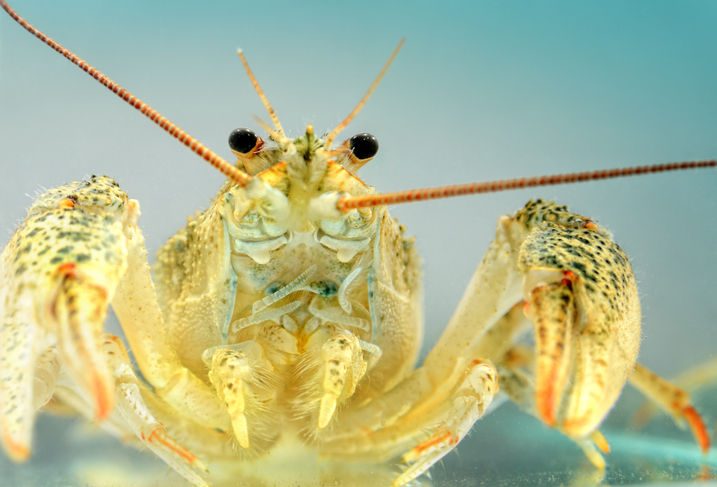
From a boiling alive ban, to a push for full legal protection: 2026 is the year for decapod welfare.
What a whirlwind few months of crustacean news! In December 2025, the Government confirmed that live boiling is not acceptable - a major step forward for crustacean welfare. We celebrated this win with MPs and advocates at a Parliamentary event on Wednesday 21 January 2026, as Crustacean Compassion marks its 10‑year anniversary. Coupled with a new Animal Sentience Committee report urging consistent legal protections for decapods, 2026 is set to be a defining year.
As we wrapped up our end-of-year blog on 19 December, we believed we had missed securing an end to live boiling in 2025. Guidance had been delayed, and we expected to enter the new year still waiting. But just three days later, the Government delivered an early Christmas gift. On Monday 22 December, the Animal Welfare Strategy for England was published, publicly confirming that boiling crustaceans alive is not acceptable, and committing to publish guidance on lawful, humane killing methods. After years of campaigning, evidence-gathering, meeting with Defra and rallying supporters, this was the breakthrough we’d been working toward.
This commitment in writing set the perfect tone as we enter our 10-year anniversary. What began as a volunteer-led effort is now a globally respected charity that has secured real wins for crustaceans - and we’re just getting started.
To mark this milestone, we’ve been reflecting on our achievements in our new Impact Report and invite you to look back with us as we celebrate a decade of decapod protection.
A powerful start to 2026
The good news didn’t stop there, as 2026 has delivered two more major developments already. First, we began the year by celebrating this milestone at a packed Parliamentary event in mid-January, a fitting start to our anniversary year. And just this week a landmark report by the Animal Sentience Committee was published, exposing major inconsistencies in the UK’s definition of ‘animal’ across legislation, and calling for crustacean inclusion in all to correct the discrepancy. Together, these create real and overdue momentum for meaningful change - if the Government follows through.
What the Animal Welfare Strategy means for decapod crustaceans
More than 500 days into its term, the Labour Government finally published its long‑awaited Animal Welfare Strategy for England just before Christmas. We’re pleased that, for the first time, crustaceans feature prominently, with three key commitments:
Ending live boiling once and for all: by clarifying and producing guidance on which killing methods meet welfare-at-killing law.
Building an evidence base across the supply chain: from capture to sale, the Government recognises that practice must improve, and research is already underway.
Exploring better standards from sea to plate: a major step toward ensuring crustaceans are treated humanely throughout the entire journey.
With our long track record of campaigning for a ban on live boiling - including major 'Boiling Point' event outside Parliament last October - this recognition is a milestone worth celebrating. Guidance is due in 2026, and we’ll continue working with Defra to ensure all inhumane killing methods, not just live boiling, are prohibited. Our Sea-to-Plate report has already been submitted to support the evidence-gathering process now underway.
Parliamentary event: kicking off 2026 together
On a rainy Wednesday 21 January 2026, we brought together MPs, animal welfare organisations, scientists, committee members, and supporters for a Parliamentary event marking a decade of impact and set out our 2026 priorities:
Turning the Animal Welfare Strategy’s commitments into swift, robust guidance.
Securing bans on all inhumane killing methods beyond live boiling.
Strengthening welfare throughout the supply chain.
Achieving crustacean inclusion in the Animal Welfare Act 2006 and other key legislation.
The energy in the room was mighty, with a united call to ensure crabs, lobsters, and other crustaceans receive the legal protections and humane treatment they deserve.
The Animal Sentience Committee’s verdict: it’s time to close the gaps in animal law
The new Animal Sentience Committee report is a major turning point. It confirms what we have long raised: despite being legally recognised as sentient, crustaceans still sit among the least protected animals in UK law. This landmark review exposes deep gaps and inconsistencies in how “animal” is defined across welfare legislation (especially those pre-dating the Sentience Act) leaving sentient species excluded from basic protections.
Decapod crustaceans are among the most affected:
Not included in the Animal Welfare Act 2006: meaning no general duty of care applies.
Excluded from the Animals (Scientific Procedures) Act 1986: making them the only recognised sentient animals used in research without oversight.
Outside the Veterinary Surgeons Act 1966 (currently under consultation).
Only partially covered by transport and killing regulations, without species-specific standards.
Their conclusion is unequivocal: these discrepancies are “not only unjustifiable on scientific grounds, they also reflect an important matter of principle” and violate a clear principle - all sentient animals should receive equivalent protection, regardless of context. Their recommendation? Add crustaceans to all relevant legislation - including the Animal Welfare Act, Animals (Scientific Procedures) Act, Welfare of Farmed Animals Regulations, and Veterinary Surgeons Act.
Crustacean Compassion has worked closely with the Sentience Committee from the start. We’ve kept crustacean protections firmly on their radar: after raising the legal loopholes at their October 2024 engagement event and submitting a formal proposal in 2025, the Committee joined us at our February 2025 roundtable and again at our Parliamentary event last month - hearing first-hand why change is so overdue. The case is clear; now the law must catch up.
A Decade of Decapod Protection – and unprecedented momentum for change
Four years after being recognised as sentient, crustaceans still sit outside the laws meant to protect them. It’s unacceptable and must change. With the Sentience Committee now amplifying our calls, we finally have real momentum to make that change.
Laura, Campaigns Director: "This is a huge moment. A Government-appointed body has formally validated our core campaign demands - and we must seize it to ensure action follows through. Theses changes would meaningfully enhance protections for millions of crustaceans. If an animal is recognised as sentient, then they should receive equivalent protection regardless of how humans use them, in farmed, fishing, research, transport, retail or home settings."
As we mark 10 years of Crustacean Compassion and 20 years of an Animal Welfare Act that still excludes crustaceans, our mission is clear: close the loophole. In addition, we’ll keep fighting for protections in science through our Crabs in Labs campaign and pushing to end live sales and live posting for home cooking - practices that must surely end as live boiling is banned. 2026 is our moment.
What happens next?
The Government must respond to the ASC report in the coming months—we’ll analyse that response and share updates.
We will push for swift publication of updated WATOK guidance to finally end inhumane killing methods.
We’ll continue working with officials, scientists, and industry to ensure reforms are evidence‑based, practical, and enforceable - delivering real‑world welfare improvements.
Help us keep up the momentum in this milestone year