Sentience in the shell: why vets must champion crustacean welfare
The government is currently consulting on long-awaited reforms to the Veterinary Surgeons Act 1966 (VSA), the legislation that governs the veterinary profession and sets out which procedures can be carried out by veterinary surgeons and nonveterinary professionals. This consultation is open until 25 March 2026 and represents a rare opportunity to help shape a modern, fair and evidence-based veterinary framework

In this blog, our CEO (and veterinary surgeon) Dr Ben Sturgeon shares why he believes it is imperative that crustaceans are included within these considerations.
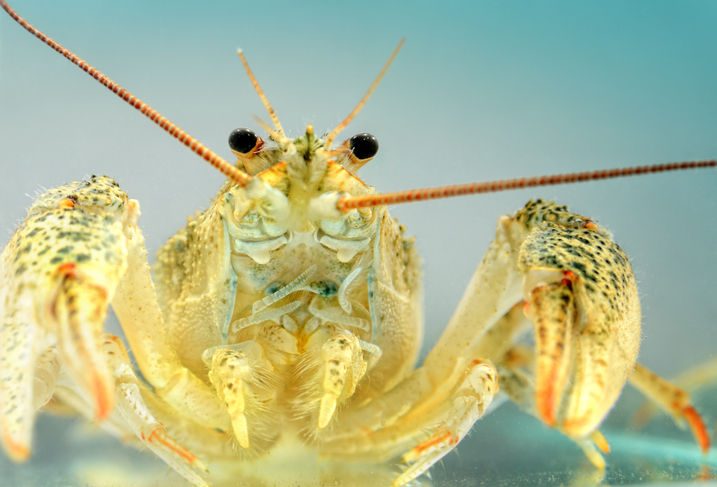
As both a philosopher pondering the moral landscape of life and a veterinary surgeon steeped in the ethics of animal care, I consider that recognising sentience in decapod crustaceans - crabs, lobsters, prawns, and shrimp - is not merely a scientific curiosity but a professional imperative. These creatures, often dismissed as automatons in boiling pots, exhibit behaviours that demand our ethical scrutiny and action.
It is unarguable and the scientific evidence continues to mount compellingly. The 2021 London School of Economics review, commissioned by the UK government, affirmed that decapods possess sentience, evidenced by pain avoidance, learning from negative stimuli, and complex social interactions. Lobsters, for instance, show prolonged stress responses to noxious stimuli, with elevated cortisol-like hormones persisting for hours—mirroring vertebrate suffering. Neurologically, their decentralized brains process nociception via opioid receptors, suggesting subjective experience akin to ours, albeit alien. Philosophically, this aligns with Bentham's utilitarian query: "The question is not, Can they reason? nor Can they talk? but, Can they suffer?" Crustaceans can, and thus merit moral consideration.
For the veterinary profession, this recognition reshapes our oath to prevent suffering. Vets traditionally focus on companion and livestock species, yet our ethical remit extends universally. The Royal College of Veterinary Surgeons' code urges us to "promote animal welfare", unbound by caseload. Ignoring crustacean plight - billions die in an industry chain, are boiled alive in home kitchens, or are dismembered without care annually - it is a complicit industrialised cruelty.
We, as veterinary surgeons or professionals, must not fear raising concerns beyond primary care; silence erodes our moral authority. Imagine a surgeon shunning public health advocacy - it is absurd. Vets, as sentience experts, hold unique leverage to influence policy, from humane slaughter mandates (e.g., electrical stunning) to research ethics.

Fear of overreach is unfounded. Advocating crustacean welfare enhances credibility, bridging veterinary science with environmental economics and marine policy. It invites interdisciplinary dialogue: how do welfare metrics intersect with sustainable fisheries? Philosophically, it challenges anthropocentrism, fostering a virtue ethics where compassion scales to the invertebrate.
Veterinarians, embrace this. Speak in legislatures, educate clients, collaborate with welfare scientists. Crustacean sentience isn't fringe - it's the vanguard of expanded empathy. By addressing it boldly, we honour our profession's highest calling: alleviating suffering wherever it lurks, shell or not.
The VSA consultation includes a crucial question about which species should be covered under veterinary oversight:
“How appropriate is the use of the Animal Welfare (Sentience) Act 2022 to define which species are covered under veterinary care?"
We believe it is very appropriate - and we are far from alone. Crustacean Compassion strongly supports extending the definition of animal to include all species recognised as sentient under the Animal Welfare (Sentience) Act. This would bring decapod crustaceans and cephalopod molluscs within the scope of veterinary care. This expansion of the definition of animal would mean that the treatment of crustaceans would be considered veterinary acts, where previously this has not been the case under the VSA.
Such an extension would reflect the best available scientific advice, and ethical framework.
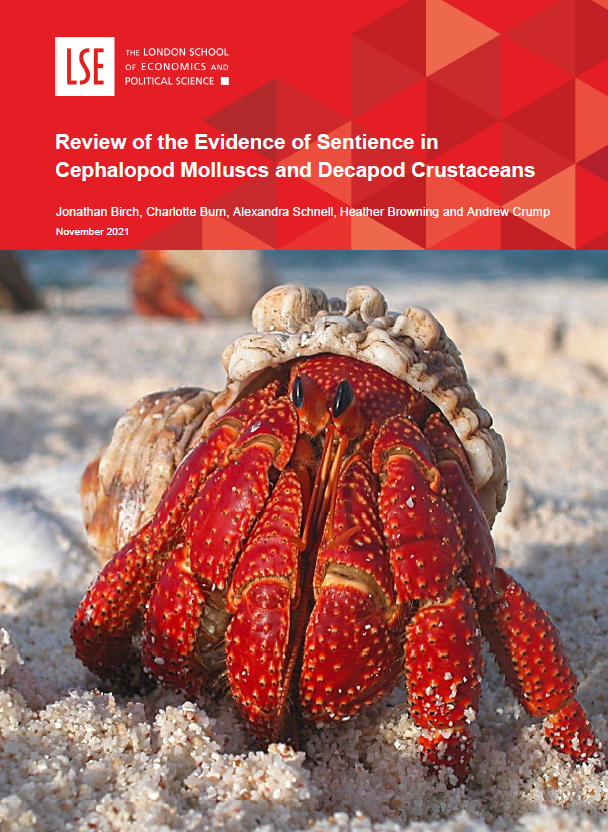
In 2021, the London School of Economics and Political Science published its landmark review on decapod and cephalopod sentience. Its central recommendation was unequivocal: “All cephalopod molluscs and decapod crustaceans be regarded as sentient animals for the purposes of UK animal welfare law.”
More recently, the Animal Sentience Committee wrote to Defra in February 2026, again recommending that species including decapod crustaceans be added to the scope of the Veterinary Surgeons Act. They said: “To achieve a consistent approach to the definition of animals within all relevant laws, the ASC recommends that legislative amendments refer to the definition of animals as laid down within the Animal Welfare (Sentience Act) 2022: all vertebrates other than humans, cephalopods and decapods.”
Take part in the consultation (open until 23.59, 25 March 2026).
Answer the set question (L2PQ4) on crustaceans, emphasising that their recognised sentience deserves meaningful protection by answering ‘very appropriate’.
Share the consultation with friends, colleagues, and your veterinary practice.
Baroness Hayman of Ullock, Minister for Animal Welfare and Biosecurity: “Whether you are a veterinary professional, worker in the sector, or a member of the public who cares about the vital services provided for our animals, your views matter. This consultation is your opportunity to help shape a modern, fair and effective veterinary framework that reflects the needs of today and the ambitions of tomorrow … I encourage everyone with an interest to take part and make their voice heard.”